Blemish- and acne- prone skin
Blemish- and acne- prone skin – Causes, triggers, symptoms and advice
Acne Vulgaris is the most common skin disease in industrialised nations. It usually begins during puberty, in line with hormone changes,
and may persist into later adulthood. Between 70% - 95% of adolescents1 are affected to some degree by blemished skin and 15-30% (1)
of them will use acne medication to relieve symptoms.There are also increasing numbers of adults, particularly women, experiencing acne later in life.
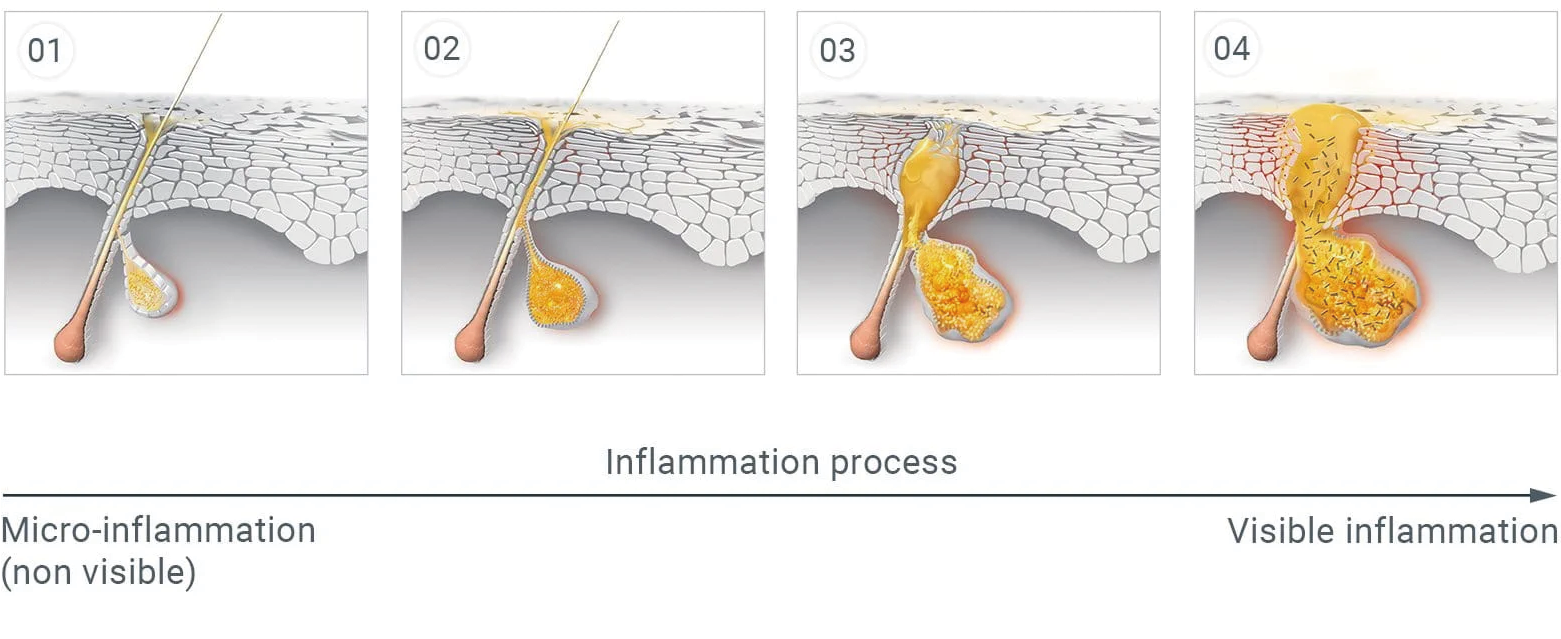
This article examines the meaning of blemished skin and looks at what makes skin acne-prone. It looks at how pimples, papules and
pustules develop and the difference between them. We explain why some people are more prone to blemishes then others,
the external and internal factors that can trigger acne and how best to alleviate symptoms and care for skin.
What is blemish-prone skin and acne?
Blemish-prone skin is skin that has a propensity to develop comedones and pimples. It is often oily and appears shiny.
This is because the sebaceous glands produce more sebum than in other skin types.
Acne (full name, Acne Vulgaris) is a non-contagious skin condition characterised by pimples caused by inflamed
and infected sebaceous glands. The disease is most common in adolescents, but symptoms can persist into adulthood
and some people, especially women, experience symptoms for the first time after the age of 25. Persistent or late-onset
acne is known as acne tarda. Find out more about adult acne is our article Acne Tarda and if you're looking
to treat acne as well as signs of ageing you can find out how in acne and aging skin.
What causes and triggers blemishes on skin?
There are several myths surrounding acne - for example, that people with blemishes are less hygenic than others.
Here are the key factors that medical professionals know are likely to make some people more prone to acne than others:
Genetics
Genes determine our skin type and some of us have skin that is more reactive and prone to inflammation,
blemishes and acne than others. If both your parents had acne there is a higher chance that you will develop the condition.
Hormones
Acne is a hormonal disease. Hormones are responsible for the development of the sebaceous glands
and they also stimulate sebum production in those sebaceous glands (an overproduction of sebum
is one of the symptoms that defines blemish-prone skin).
The increase of hormones during puberty is the main reason why acne is most prevalent in adolescence,
but hormones continue to effect men and women differently at different life stages: changes in hormonal
levels during the menstrual cycle often causes flare-ups for women in their 20s and 30s.
Find out more about the relationship between hormones and acne in our article hormones and acne
and read more about adult acne in our article on Acne Tarda.
Medication
Some medicines - such as steroids and lithium - can cause acne. Find out more in acne and sport.
What can I do to help reduce blemishes and care for my skin?
Medical treatment
There is a selection of options available for acne. Your doctor will be able to advise which is best for you.
Find out more in acne medication and possible side effects.
Sun protection
Blemishes can cause pigmentation issues if over-exposed to the sun, and acne medications can make skin
more sensitive to UV rays, so it’s important to use appropriate sun protection.
Try Eucerin Sun Gel-Creme Oil Control Dry Touch SPF30 or SPF50+. Read more in acne and sun protection.